
Hydraulic Cylinders
What Are the Best Hydraulic Cylinders to Buy for a Heavy-Duty Tipper Truck?
Choosing the right hydraulic cylinder for a heavy-duty tipper truck is critical for safe, reliable and efficient tipping operations.
Hidromas Engineering Team · 4 min read
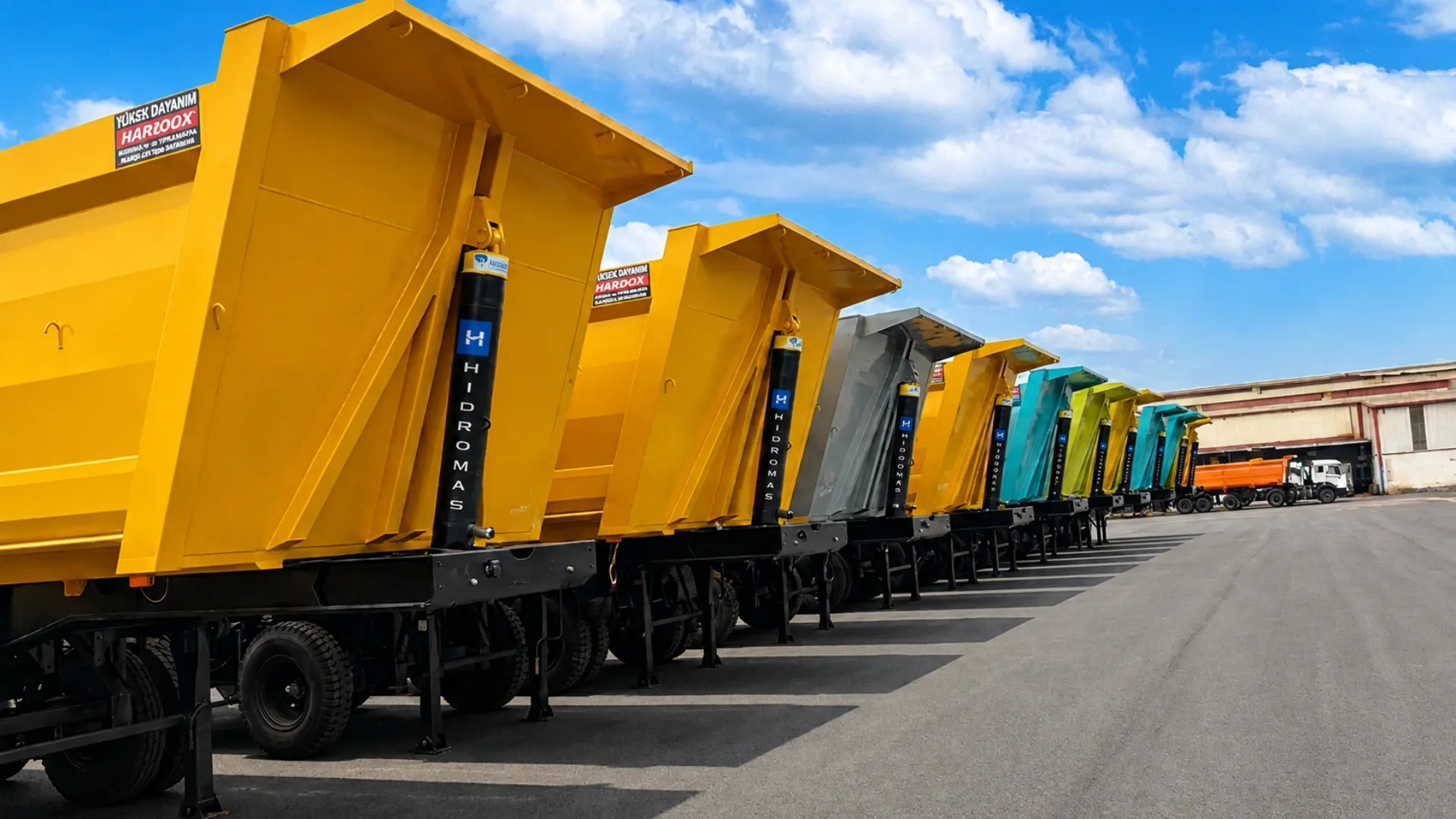
Choosing the right hydraulic cylinder for a heavy-duty tipper truck is critical for safe, reliable and efficient tipping operations. Heavy loads, demanding working environments, frequent tipping cycles and uneven loading conditions can place significant stress on the hydraulic system.
For this reason, selecting a tipping cylinder should not be based only on lifting capacity or price. The cylinder design, material quality, operating pressure, stroke length, sealing system and resistance to side loads all influence its performance and service life.
In this guide, we explain the most important factors to consider when choosing a heavy-duty hydraulic tipping cylinder and how to determine the right cylinder for your truck and application.
What Type of Hydraulic Cylinder Is Best for a Heavy-Duty Tipper Truck?
For most heavy-duty tipper trucks, a telescopic hydraulic cylinder is the preferred solution.
Unlike a conventional single-stage cylinder, a telescopic cylinder contains multiple stages that extend sequentially. This design provides a long working stroke while maintaining a relatively compact closed length.
This makes telescopic cylinders particularly suitable for:
* Heavy-duty tipper trucks
* Construction vehicles
* Mining and quarry applications
* Semi-trailers
* Agricultural tipping vehicles
* Bulk material transportation
* Waste and recycling vehicles
Depending on the vehicle and body design, the hydraulic cylinder can be installed as a front-end tipping cylinder or an underbody tipping cylinder.
The correct configuration depends on factors such as body length, tipping capacity, available installation space, tipping angle and vehicle design.
1. Choose a Cylinder Designed for High Loads and Pressure
A heavy-duty tipper truck may carry substantial loads such as sand, gravel, stone, soil, construction materials or other bulk products. During tipping, the hydraulic cylinder must safely generate enough force to lift the loaded body.
The cylinder therefore needs to withstand not only the required hydraulic pressure but also the mechanical forces created throughout the tipping cycle.
Material selection is particularly important.
Hidromas tipping cylinders are manufactured using high-alloy steel designed to withstand high hydraulic pressures and demanding operating conditions. The cylinder structure is engineered to provide the strength required for professional heavy-duty tipping applications.
Choosing a properly engineered cylinder contributes to:
* Higher structural strength
* Reliable lifting performance
* Resistance to demanding working conditions
* Longer operating life
* Improved safety during tipping operations
2. Consider Side-Load Resistance
One of the most important considerations when selecting a hydraulic cylinder for a heavy-duty tipper is its ability to operate reliably under real-world loading conditions.
Ideally, a tipping cylinder operates primarily under axial load. However, uneven material distribution, vehicle positioning and demanding operating environments can introduce additional forces and side loads.
These forces can place significant stress on the cylinder stages, guides and sealing components.
Hidromas uses high-alloy steel in its telescopic tipping cylinders to provide the mechanical strength required to withstand high pressures and demanding load conditions, including side-load forces that may occur during operation.
However, no hydraulic tipping cylinder should be considered a substitute for correct vehicle positioning and safe operating procedures. Tipping on excessively uneven or unstable ground can create dangerous lateral forces regardless of cylinder construction.
3. Look for Chromium-Plated Cylinder Stages
Surface quality is another important factor affecting the durability and operating performance of a telescopic cylinder.
All stages of Hidromas telescopic cylinders are chromium plated.
Chromium-plated surfaces provide important advantages for demanding tipping applications, including improved surface hardness, wear resistance and protection of the working surfaces.
Because telescopic cylinder stages repeatedly move through seals and guiding components during operation, high-quality surface treatment can contribute significantly to long-term reliability.
For heavy-duty trucks operating frequently or in challenging environments, this becomes particularly important.
4. Check the Hydraulic Cylinder Sealing System
The sealing system is one of the most critical components of any hydraulic cylinder.
Hydraulic seals must maintain pressure while the cylinder stages extend and retract repeatedly. Temperature changes, contamination and demanding operating cycles can all affect seal performance.
Hidromas hydraulic tipping cylinders use a sealing system designed to operate efficiently between -30°C and +55°C.
This wide operating temperature range makes the cylinders suitable for use across different climates and working environments, from cold winter conditions to demanding high-temperature applications.
A high-quality sealing system can help:
* Maintain hydraulic pressure
* Reduce the risk of oil leakage
* Protect internal cylinder components
* Support smooth stage movement
* Extend cylinder service life
When comparing tipping cylinders, the operating temperature range of the sealing system should therefore be considered alongside pressure and lifting capacity.
5. Select the Correct Stroke Length
Stroke length determines how far the telescopic cylinder can extend and has a direct influence on the achievable tipping angle.
A cylinder with an unsuitable stroke can result in insufficient tipping angle or an incorrect installation geometry.
The required stroke depends on several factors:
Truck chassis + tipper body dimensions + cylinder mounting position + required tipping angle + application = required cylinder configuration
Hidromas offers a wide range of telescopic hydraulic cylinders for different vehicle configurations, and custom stroke lengths are available upon request for applications requiring a specific tipping geometry.
This flexibility is particularly valuable for truck body builders and OEMs developing vehicles with unique chassis or body dimensions.
6. Front-End or Underbody Tipping Cylinder?
Another important decision is choosing between a front-end cylinder and an underbody cylinder.
Front-End Tipping Cylinders
Front-end telescopic cylinders are installed toward the front of the tipper body. They are commonly used for heavy-duty trucks and semi-trailers where long stroke lengths and substantial lifting forces are required.
They are widely used in applications such as:
* Construction
* Mining
* Sand and gravel transportation
* Bulk material transport
* Heavy-duty semi-trailers
Underbody Tipping Cylinders
Underbody cylinders are installed underneath the tipper body. Their compact installation makes them suitable for applications where the front of the body needs to remain unobstructed or where the vehicle design requires an underbody lifting system.
The best solution depends on the truck configuration, available installation space, body length, load distribution and required tipping performance.
7. Don’t Select a Tipping Cylinder Based Only on Maximum Tonnage
A common mistake when purchasing a hydraulic cylinder for a tipper truck is selecting a cylinder based only on the maximum load capacity.
For example, knowing that a truck carries a certain payload is not enough to determine the correct cylinder.
Cylinder selection should consider several technical parameters together:
* Gross vehicle and tipping body weight
* Payload
* Body length
* Required tipping angle
* Cylinder mounting position
* Closed cylinder length
* Required stroke
* Maximum hydraulic working pressure
* Number and diameter of cylinder stages
* Vehicle and chassis configuration
* Expected operating environment
* Frequency of tipping cycles
The relationship between these parameters determines the actual force required from the hydraulic cylinder.
This is why professional cylinder selection should always be based on the complete tipping geometry and application requirements, rather than tonnage alone.
What Makes a Good Heavy-Duty Tipping Cylinder?
When comparing hydraulic cylinders from different manufacturers, look beyond basic specifications.
A reliable heavy-duty tipping cylinder should combine:
High-strength materials
The cylinder must withstand the pressure and mechanical forces generated during heavy-duty tipping operations.
High-quality stage surfaces
Properly treated cylinder stages help reduce wear and support reliable long-term operation.
Reliable sealing technology
The sealing system should perform consistently across the expected operating temperature range.
Correct tipping geometry
Stroke, closed length, number of stages and installation dimensions must match the vehicle.
Resistance to demanding operating conditions
Heavy-duty trucks frequently operate in construction sites, mines, quarries and other challenging environments.
Manufacturer engineering support
For non-standard vehicles, the ability to provide customized cylinder configurations can be extremely valuable.
Hidromas Hydraulic Cylinders for Heavy-Duty Tipper Trucks
With decades of experience in hydraulic tipping systems, Hidromas develops telescopic hydraulic cylinders for a wide range of commercial vehicle and heavy-duty tipping applications.
Hidromas tipping cylinders combine several important features for demanding applications:
* Chromium-plated stages across the telescopic cylinder
* High-alloy steel construction
* Design suitable for high hydraulic pressures and demanding load conditions
* Sealing systems operating efficiently from -30°C to +55°C
* Multiple cylinder configurations for different tipping applications
* Front-end and underbody cylinder solutions
* Custom stroke lengths available upon request
* Engineering solutions for different truck, trailer and body configurations
Rather than selecting a cylinder only from its nominal capacity, Hidromas recommends matching the hydraulic cylinder to the complete vehicle and tipping application.
How Do I Choose the Right Hidromas Cylinder?
If you are a truck body builder, trailer manufacturer, OEM, hydraulic system integrator or fleet operator, providing accurate application information helps determine the most appropriate cylinder.
Useful information includes:
* Truck or trailer type
* Tipper body dimensions
* Maximum payload
* Required tipping angle
* Available installation dimensions
* Preferred front-end or underbody configuration
* Hydraulic system working pressure
* Required stroke, if already known
* Operating environment
Based on these parameters, the appropriate Hidromas telescopic hydraulic cylinder can be selected for the application.
Conclusion
The best hydraulic cylinder for a heavy-duty tipper truck is not simply the cylinder with the highest lifting capacity. It is the cylinder that correctly matches the load, hydraulic pressure, tipping geometry, stroke requirement, installation dimensions and operating environment of the vehicle.
For demanding tipping applications, features such as high-alloy steel construction, chromium-plated stages, reliable sealing technology and correct cylinder geometry can make a significant difference in durability and performance.
Hidromas provides front-end and underbody telescopic hydraulic cylinders for heavy-duty tipper trucks, trailers and commercial vehicles, with custom stroke options available for specialized applications.
Looking for the right hydraulic cylinder for your heavy-duty tipper truck?
Contact Hidromas with your vehicle, tipper body and hydraulic system specifications to identify the most suitable cylinder configuration for your application.